
SSSSNE Home Page

Draft Interim Regional Supplement to COE Wetland Manual - Northeast
Registry Update Period is NOW OPEN Please update your listing by August 1 2008
Smithsonian Soil Exhibit Trip Planned for January 8-9 2009
Society of Soil Scientists

of Southern New England

Connecticut
Massachusetts
Rhode Island

PO Box 258
Storrs, CT. 06268

Newsletter

Organized May 30, 1974, the Society of Soil Scientists of Southern New England is a non-profit, professional organization dedicated to advancing the soil science profession and encouraging broad use of soil resource information.
Mark Stolt, President

Connecticut
Connecticut

Massachusetts
Massachusetts

Rhode Island
Rhode Island

Southern New England

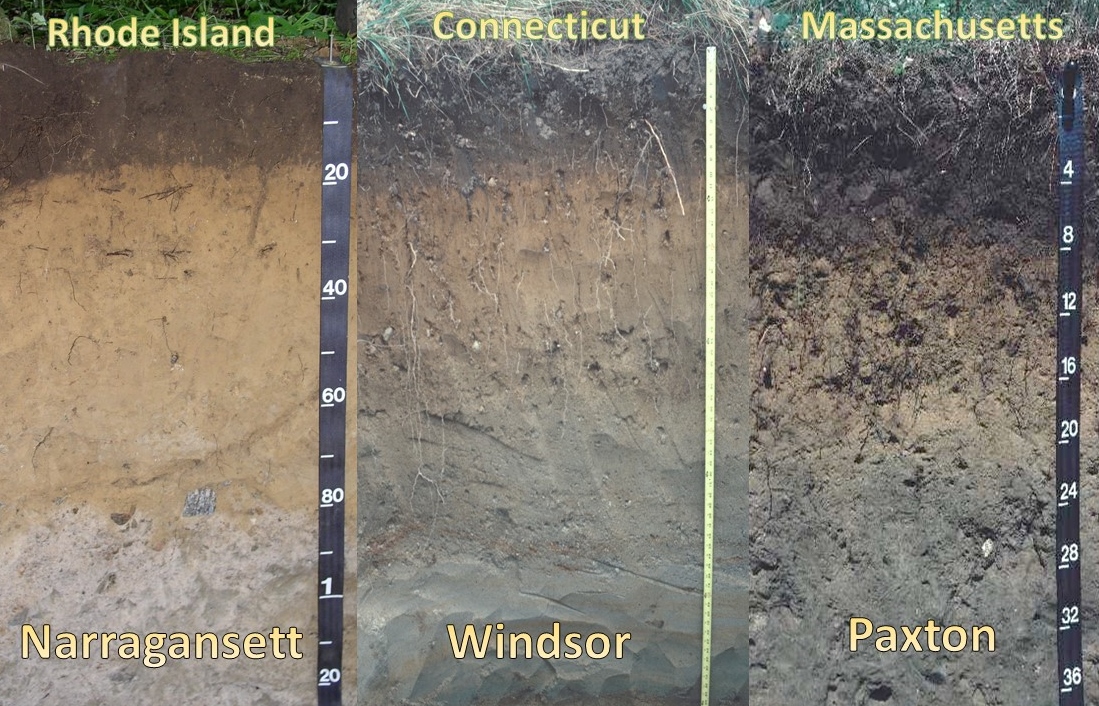
Windsor Soil
Windsor

Paxton Soil
Paxton

Narragansett Soil
Narragansett

Official and
Unofficial
State Soils

(Click on
image for more
information)

 
Soil Properties  
Click for Membership Information    
Bylaws and Constitution    
   
SSSSNE Code of Ethics    
Soil and other links    
Click for Soil Profile Pictures    

Spring 2007 Soil Conference Speaker Presentations
National Society of Consulting Soil Scientists 2008 annual meeting

   
2001 Board of Directors

NeSoil: Soil Survey Information


SRH Southern New England

Shaded relief map of Southern New England. Some of the major land resource areas of New England are visible on this map including; the Northeastern Mountains (reddish-brown colors) in the western part, the Connecticut River Valley (green flat area east of the mountains), the New England and Eastern New York Upland-northern and southern part (yellowish-green to green color east of the Connecticut River Valley, and the Cape Cod Coastal Lowlands in the southeastern part. The highest elevation is Mt. Graylock in MA. at 1063 meters (3397 feet). The lowest elevation is sea level.  The dominant soil orders mapped in the region are Inceptisols, Entisols, Spodosols, and Histosols. Soil temperature regimes are mesic (generally below 1000 feet) and frigid, and the moisture regime is udic (precipitation approx. 40 in/yr.). The soils formed in glacial deposits (till, outwash, and lacustrine/marine) and post-glacial deposits (eolian, alluvial, organic, and human transported material).


Send comments/suggestion/links to the Webmaster.

This Site Updated: Tuesday, July 22, 2008


You are Visitor

14186

Thank you.

News/Announcements

Photos from the 2004 Annual Meeting

PHOTOS from the 2003 Annual Dinner

Photos from Block Island Tour - Updated Dec. 2003

Images from the Back to the Basics Workshop

Photo's From The Onsite Wastewater Training Facility Tour

Photo's from the 2001 Annual Meeting